

[For new readers – I’ve been doing a weekly blog ‘weeknotes’ over on LinkedIn for a couple of years now. I’m experimenting with posting them here too. Sorry if you were expecting another sailing update or something less work-related!]
What was happening?
This was a busy old week! On Monday I covered a talk on digital leadership for a colleague who wasn’t well. I also chatted to a charity about how to make their online events accessible but also secure. Tuesday was full of internal catchups, and prepping for a trip to Dundee. Wednesday was a busy one: off early to Dundee for an AI talk and staffing a Funding Scotland stand, then back to Edinburgh for the in-person launch of ClimACTical. Yesterday I was pulling together talks for next week, and compiling an update for a funder.
What was going well?
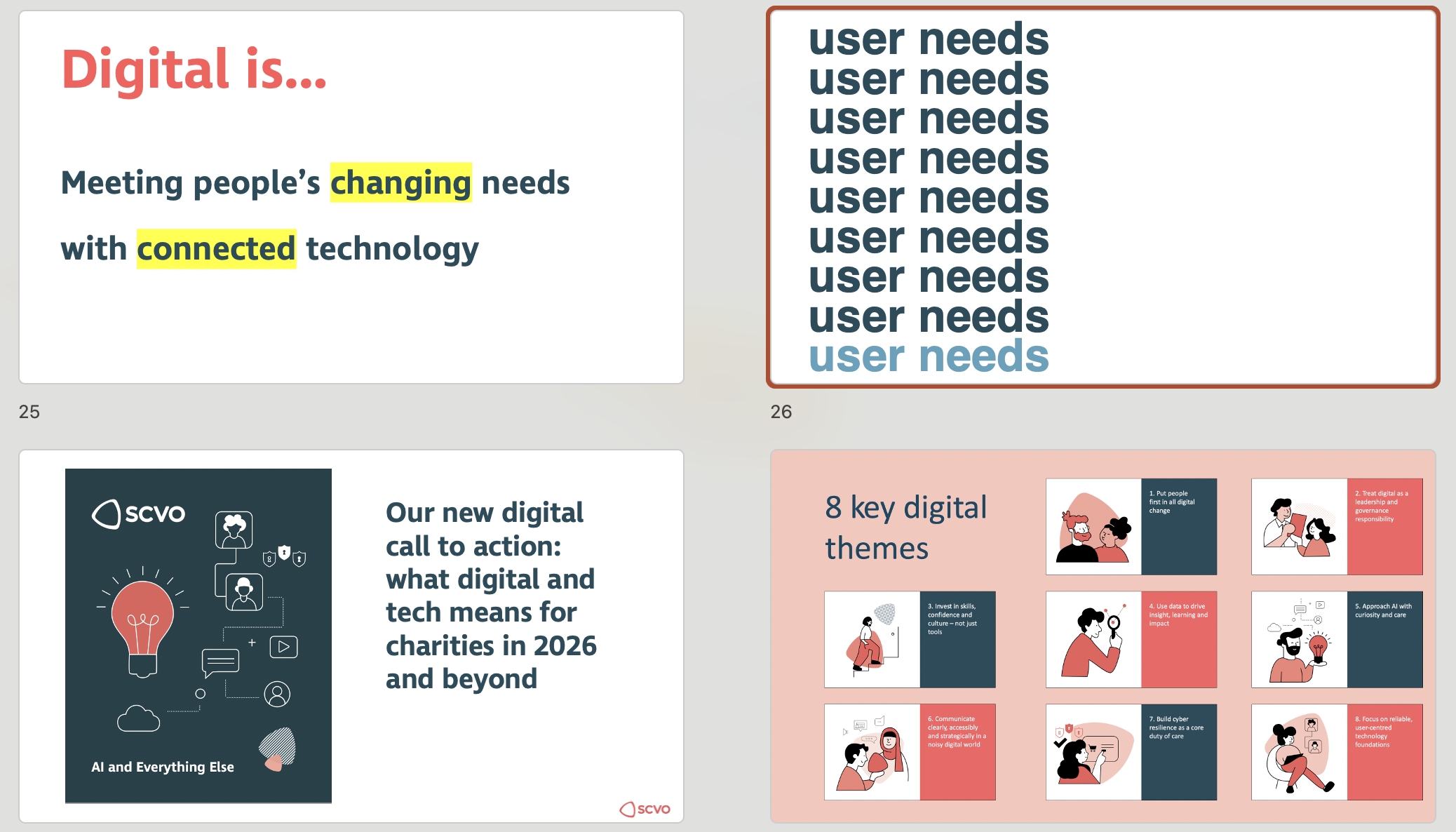
I enjoyed doing my various talks. Although the Monday session was quite short notice, I had lots of new thinking from our Digital Call to Action that was easy to pull in.
In Dundee, I asked my standard pair of questions about AI:
- Who is using AI in their organisation? (95% = yes)
- Who has some kind of governance, policy or strategy in place (5% = yes) So a very receptive audience for my talk on how organisations can get strategic and start using AI ethically and effectively.
It was great to see ClimACTical getting a warm reception at the Environmental Funder’s Network. Chiara and expert partners have put a lot of care and effort into this and it will be a really useful resource to get boards of all sizes thinking about their climate context.https://climateconfident.scot/learn
Wednesday involved a lot of travel – but I enjoyed trying out a Voi bike to flit from Haymarket to Chambers St in the afternoon. It’s the kind of journey that would be a long march on foot, and just doesn’t work by bus. By Voi bike it was an easy 9 minutes!
On Thursday I put out a mini survey internally about AI usage. There’s been a good response so far – my top tip is offering novelty prizes.
The whole team are in a super busy phase with a lot of travel and events at the moment. I think this is the big bulge of events between projects starting in April and the school holidays. But despite the busyness team morale seems high.
What was more challenging?
While I do enjoy running a stand at an in-person event, I’m not a big fan of lugging around rollup banners and boxes of leaflets! That’s got me thinking about ways to make a lighter event kit so we can make a good impression while lightening our load.
What am I noticing or wondering about?
One reason why the AI usage stat is so high at the moment is that AI features are embedded in every digital tool you can think of. Tech companies who have spent loads on infrastructure are very keen to see a return on their investment, and the old ’embed by default’ playbook is appearing everywhere. You can’t escape AI, even if you really want to.
That’s got me thinking about what it might mean to have chosen, intentional tech. Where you are able to make conscious decisions about what tools you have, and how they’re set up. For a lot of small charities, this can be challenging to do. They’re juggling lots of things at once, and are looking for simple, practical tools to make rapid progress. And big tech brands with their defaults can seem a safer option.
It’s great that Maddie has joined the pilot cohort for #TechFreedom – we’ll be exploring this space more as a team in the coming year, since it cuts across digital capability, security and sustainability.
AI links
Great post from Doug Belshaw on how the runaway energy costs of AI models stems from a failure of transparency and governance: https://blog.dougbelshaw.com/ais-energy-problem-is-a-systems-problem
Big Tech and AI enthusiasts are currently fixated on ‘braggawatts’ – building the biggest data centres and models they can – while paying hardly any attention to efficiency (energy per output). In his post, Doug highlights a host of known ways that the efficiency of AI could be dramatically improved. But these possibilities are being overlooked. As Doug says: The barrier here isn’t physics or engineering. What’s missing is a way to make efficiency legible to organisations procuring AI systems, to policymakers, and to the public. And then, on top of that, a set of incentives that reward improving that efficiency. Doug also did a research paper for Friends of the Earth a while ago – also well worth a read
➡️ Implications for charities – Even if few or no services are offering it yet, starting to ask for an ‘energy per output’ metric on AI tools will slowly encourage vendors to pay attention to this.
What am I reading?
I made a start on ‘Elemental: The New Geography of Climate Change and How We Survive It’ by Arthur Snell. It’s a high-level look at how climate change drives geopolitical change and conflict. Sobering stuff, but also some optimism as Snell highlights that many futures are still open – collaboration, foresight and concerted climate action can still make a big difference.
I enjoyed watching a few tech-related gems from the BBC Archive with my 8-year-old son. His mind was a little blown at the prospect of 1980s-era email! He said he really enjoys watching things about old-fashioned technology and how people thought the future might be.

Sailing sidenote
Last weekend I took my neighbour out for his fourth ever sail in a boat and let him helm in the last race of the Spring series. We managed a convincing win! So he has a hard record to hold onto. We came second in the Spring series which is a good result. No sailing for me this week but I did crew the safety boat for the dinghy race on Thursday, on an evening where everyone managed a capsize, which kept us busy.

